Think clearly. Speak confidently.
The club helps students express ideas with confidence and respect. Debate also strengthens research, clear writing, careful listening, teamwork, and thoughtful disagreement.
Open to Moody students in grades 6–8. Beginners are always welcome.
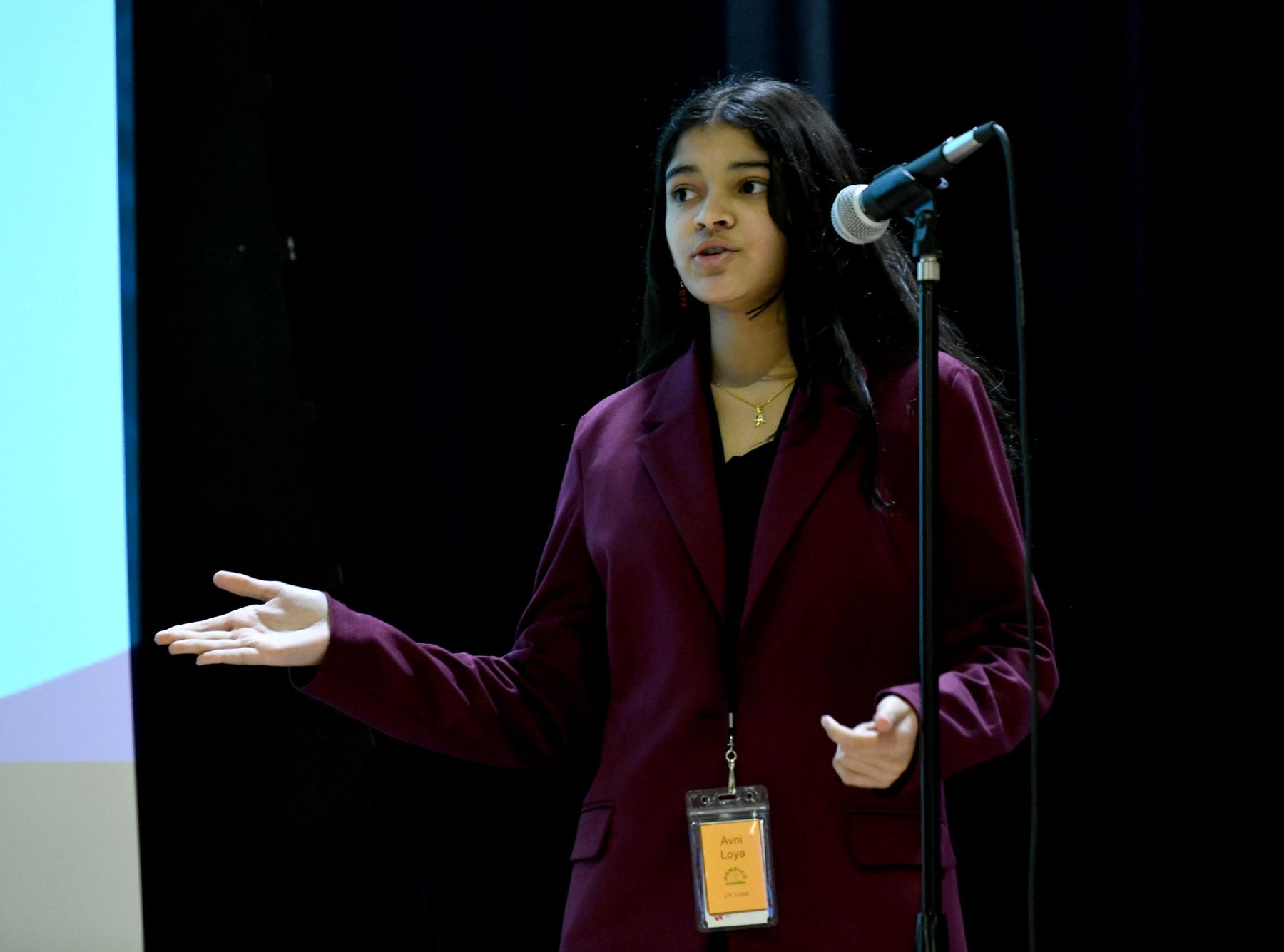
The Moody Middle School Debate Club gives students a place to examine real questions, support ideas with evidence, and practice speaking with purpose.
Students can explore Public Forum, Lincoln-Douglas, and Congressional Debate while developing confidence, teamwork, research skills, critical thinking, and respectful disagreement.
The club helps students express ideas with confidence and respect. Debate also strengthens research, clear writing, careful listening, teamwork, and thoughtful disagreement.
Break a topic into questions, compare evidence, notice assumptions, and decide which arguments are strongest.
Organize a message, explain it in your own words, and deliver it with confidence so listeners understand why it matters.
Ask focused questions that clarify a claim, test the evidence behind it, and uncover reasoning that still needs support.
Support your case, listen to challenges, and respond directly and respectfully when someone disagrees.
Build confidence over time while improving research, teamwork, speaking, listening, and the courage to try again.
Tuesday meetings mix serious preparation with active practice. The exact plan changes with the team’s needs, so students may work on several different skills in one afternoon.
Students practice complete or shortened rounds, try arguments aloud, and learn how to respond when the other side challenges them.
The group examines more than one side of an issue, listens carefully, and practices disagreeing with ideas clearly and respectfully.
Students break a topic into its key questions, identify what each side must prove, and look for the strongest points of disagreement.
Students find useful evidence, organize it into clear arguments, and build cases that explain both the claim and the reasoning behind it.
Short exercises develop pace, clarity, eye contact, confident delivery, questioning, rebuttal, and thinking under time pressure.
Before competitions, students refine cases, prepare responses, practice rounds, and use games or mini-challenges to sharpen specific skills.
There is no single “best” type of debate. The right starting point depends on how you like to think, prepare, and speak.
Partners debate a current issue using evidence, clear explanations, questions, and quick rebuttals. Preparation and speaking are shared between teammates.
One student debates another about a question involving values, principles, or what society should prioritize. Each debater builds and defends an individual case.
Students act as legislators, give speeches for or against proposed legislation, ask questions, and persuade a room rather than one opposing team.
Debate can begin with a current issue, a question about values, or a proposed law. These examples are for illustration only—not announced club or tournament topics.
Quick answers for students and families who are new to debate.
All Moody middle-school students in grades 6–8 can participate. Beginners are welcome, and no previous debate experience is required.
The club meets every Tuesday after school from 3:30–4:30 PM in Room 213.
Moody teaches Public Forum, Lincoln-Douglas, and Congressional Debate. The comparison above can help students choose a starting point.
Start by learning how the three formats work and noticing which style fits you best. Current tournament plans may also affect which events the club practices.
No. Tournaments are not required, but they are heavily suggested because they let students use their skills in real rounds and learn from feedback.
Bring any materials announced for that meeting. Tournament-specific supplies, technology rules, and dress expectations will be shared when an event is confirmed.